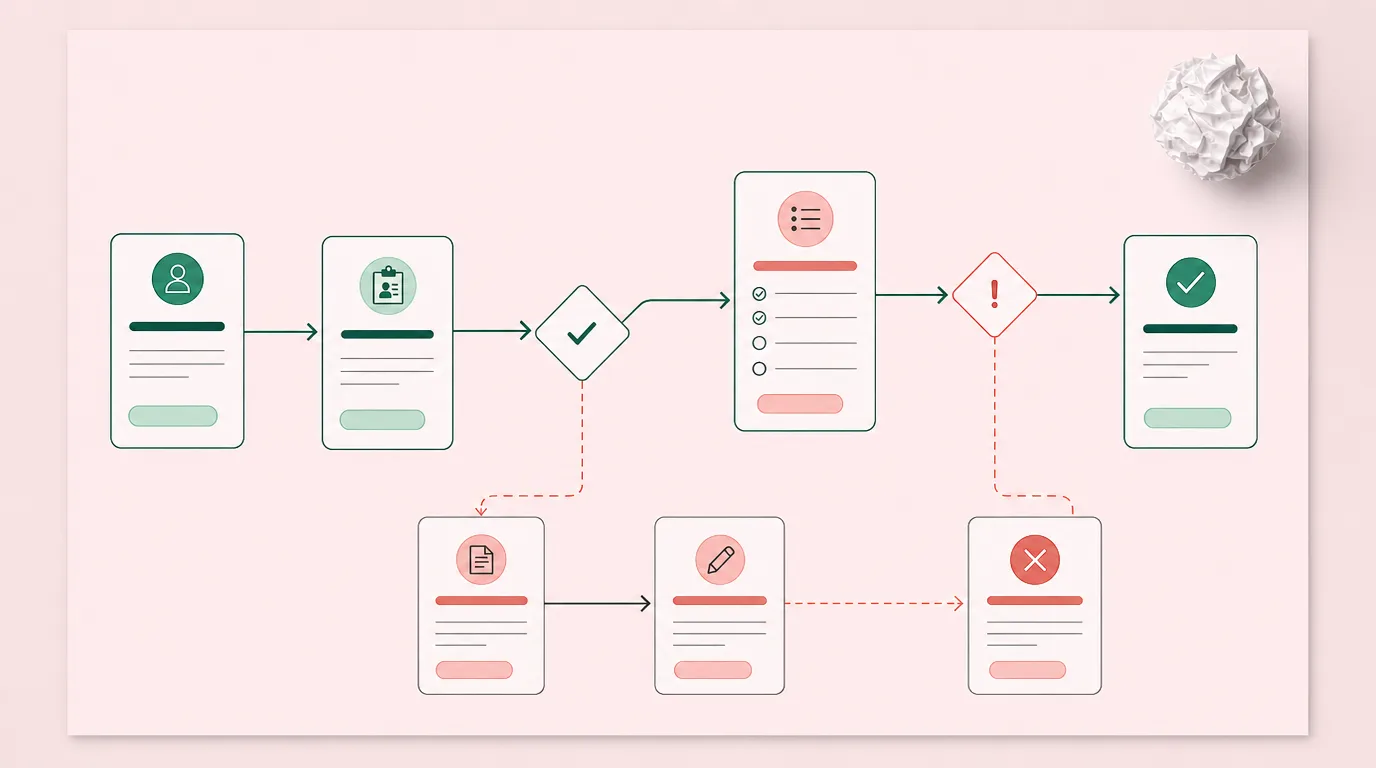
In an advisory firm, administrative errors often start quietly. A client detail is updated in one place but not another. A follow-up is left sitting in someone's inbox. A document is saved outside the client record. None of these moments feel major on their own, but together they create extra work, slower service, and weaker visibility across the practice.
For Canadian financial advisors, reducing administrative errors starts with changing how daily work moves through the firm. When client data, tasks, documents, communication, and compliance records stay connected, the team has fewer gaps to manage and more confidence in the information guiding each client relationship.
Why Administrative Errors Happen in Financial Advisor Workflows
Administrative errors often begin when client information moves through too many disconnected places. A client conversation may start in email, continue in a meeting, require a document upload, trigger a task, and update a CRM record. Without a consistent workflow, small gaps become avoidable mistakes.
- Manual entry and double entry: When advisors or support staff retype information across portals, spreadsheets, forms, and CRM records, the same client data can be copied incorrectly, missed entirely, or updated in one place but not another.
- Fragmented tools and data silos: When notes, tasks, documents, and client communication live in separate systems, teams lose one reliable source of truth. This makes it harder to verify records quickly and confidently.
- Incomplete client information: Missing dates, unsigned documents, outdated contact details, or incomplete onboarding answers can slow down financial planning, delay follow-ups, and create inaccurate records that must be fixed later.
- Missed follow-ups and task handoffs: Administrative tasks can fall through the cracks when ownership is unclear. A missed follow-up email, renewal reminder, or document request can weaken responsiveness and damage client trust.
- Weak documentation and audit trail gaps: If client interactions and task updates are not tracked clearly, advisors may struggle to prove what happened, when it happened, and who handled it.
Prevent manual data entry mistakes
Consolidate your tools into Laylah's integrated advisor software.
How to Reduce Manual Errors With Better CRM Records
One of the most effective ways to reduce administrative errors is to improve how client information is captured, organized, and updated. A CRM should not be a passive database that teams update when they have time. It should support the daily work of the advisory practice.
For Canadian advisory firms reviewing their systems, Laylah's CRM and practice management features show how connected records, cases, tasks, documents, and communication can work together inside one advisor-focused platform.
Centralize Client Information in One Source of Truth
A source of truth is the place your team trusts first when it needs accurate client information. Without that central record, advisors may rely on inbox searches, old notes, spreadsheets, back-office portals, or memory. That creates a higher risk of outdated information and duplicated work.
Centralized client data helps advisors reduce errors because everyone works from the same record. Client details, tasks, documents, notes, and case history become easier to find and verify. This matters most when a practice has multiple team members supporting the same client relationship.
Standardize Case Management, Tasks, and Workflow Templates
Administrative mistakes often happen when each advisor or staff member handles the same process differently. One person may track tasks in the CRM, another may use email flags, and another may rely on a spreadsheet. That inconsistency makes it harder to manage cases across the firm.
Standardized workflows help reduce variability. With case management for financial advisors, a firm can organize work by client case, stage, responsibility, and next step. This helps advisors and support staff see what needs to happen, what has already happened, and what is still outstanding.
Automate CRM Updates Without Losing Advisor Control
Automation can reduce workload, but it should not remove advisor judgment. The goal is to automate repetitive administrative tasks while keeping the advisor in control of the client relationship and final decisions.
CRM automation can help with:
- Updating client records after key interactions
- Creating follow-up tasks after meetings
- Organizing document requests and reminders
- Keeping case workflows moving
- Reducing repetitive manual entry
The best automation does not replace the advisor. It reduces time-consuming admin tasks so advisors can spend more attention on financial planning, client conversations, and advice quality.
Replace disconnected databases
Laylah is a purpose-built CRM for Canadian independent financial advisors.
The Benefits of Minimizing Administrative Errors for Financial Advisors
When administrative errors are reduced, the benefit is not limited to cleaner records. The entire advisory practice can operate with more confidence. Advisors have better information. Support staff have clearer ownership. Compliance teams have stronger documentation. Clients experience fewer delays and fewer repeated requests.
Administrative accuracy becomes a business advantage because it supports scale without adding chaos.
Advisors Spend Less Time Fixing Admin and More Time Serving Clients
Every avoidable admin error has a time cost. Someone has to find the issue, confirm the correct information, update the record, notify the right person, and sometimes explain the delay to the client. That time takes advisors away from higher-value work.
When workflows are cleaner, advisors spend less time correcting records and more time on client strategy, financial planning, and relationship-building. Support staff can also work more efficiently because tasks, documents, and client information are easier to locate.
Teams Gain Better Compliance Confidence and Operational Control
Financial advisor companies benefit when processes are repeatable. A repeatable process is easier to train, monitor, improve, and defend. It also gives practice owners and operations managers better visibility into where work stands across the firm.
With stronger CRM records, audit trails, and task workflows, firms can improve compliance confidence and operational control. This does not remove the need for professional judgment. It gives teams a clearer structure for applying that judgment consistently.
Clients Receive a Smoother, More Reliable Experience
Clients notice when an advisory firm is organized. They do not have to resend the same information, chase updates, or wonder whether the next step has been handled. The experience feels smoother because the firm has better internal control.
Accurate records also support more personalized service. When advisors can quickly see client information, prior conversations, documents, and open tasks, they can respond with more context and confidence.
Reducing administrative errors is not just about avoiding problems. It is about creating a more reliable advisory experience.
How Can Laylah Help Reduce Administrative Errors?
Laylah is built for Canadian independent financial advisors and advisory teams that need a cleaner way to manage client data, compliance, communication, and practice operations. Instead of forcing teams to stitch together disconnected tools, Laylah brings advisor workflows into one connected CRM and practice management environment.
The platform is especially relevant for firms dealing with double entry, fragmented records, compliance documentation pressure, and inconsistent task management.
Why Financial Advisors Use Laylah's CRM
Case Management
Laylah's case management helps advisors organize client work by case, stage, responsibility, and next step. Instead of relying on memory or scattered task lists, teams can see where each file stands and what needs attention. This reduces missed handoffs, keeps work moving consistently, and gives advisors a clearer structure for managing client requests, applications, renewals, and follow-up activity.
Compliance Workflows
Laylah supports compliance by keeping important activity connected to the client record. Advisors can maintain clearer visibility over actions, documents, communication, and workflow history without chasing information across disconnected systems. This helps reduce documentation gaps, supports stronger audit readiness, and gives advisory teams a more consistent way to show what happened across the client relationship.
Secure Client Space
Laylah's secure client portal gives advisors and clients a controlled place to exchange information, share documents, and manage communication. This reduces the risk of important details being lost in inboxes or sent through less organized channels. When client communication stays connected to the right record, advisors can respond with more context and reduce avoidable follow-up errors.
Carrier and Back-Office Synchronization
Laylah helps reduce double entry through carrier and back-office synchronization. When advisor data feeds are connected, teams spend less time retyping information across systems and have fewer chances to introduce client data errors. This makes it easier to keep records current, reduce repetitive admin work, and support more accurate workflows across the advisory practice.
Financial Needs Analysis
Laylah's financial needs analysis tool helps advisors work from client information already connected inside the CRM. Instead of moving details between separate tools, advisors can support planning conversations from a more organized record. This helps reduce manual transfer errors, improves consistency across the advice process, and gives teams a cleaner way to connect client data with planning work.
Streamline your practice operations
A unified CRM built specifically for Canadian wealth professionals.