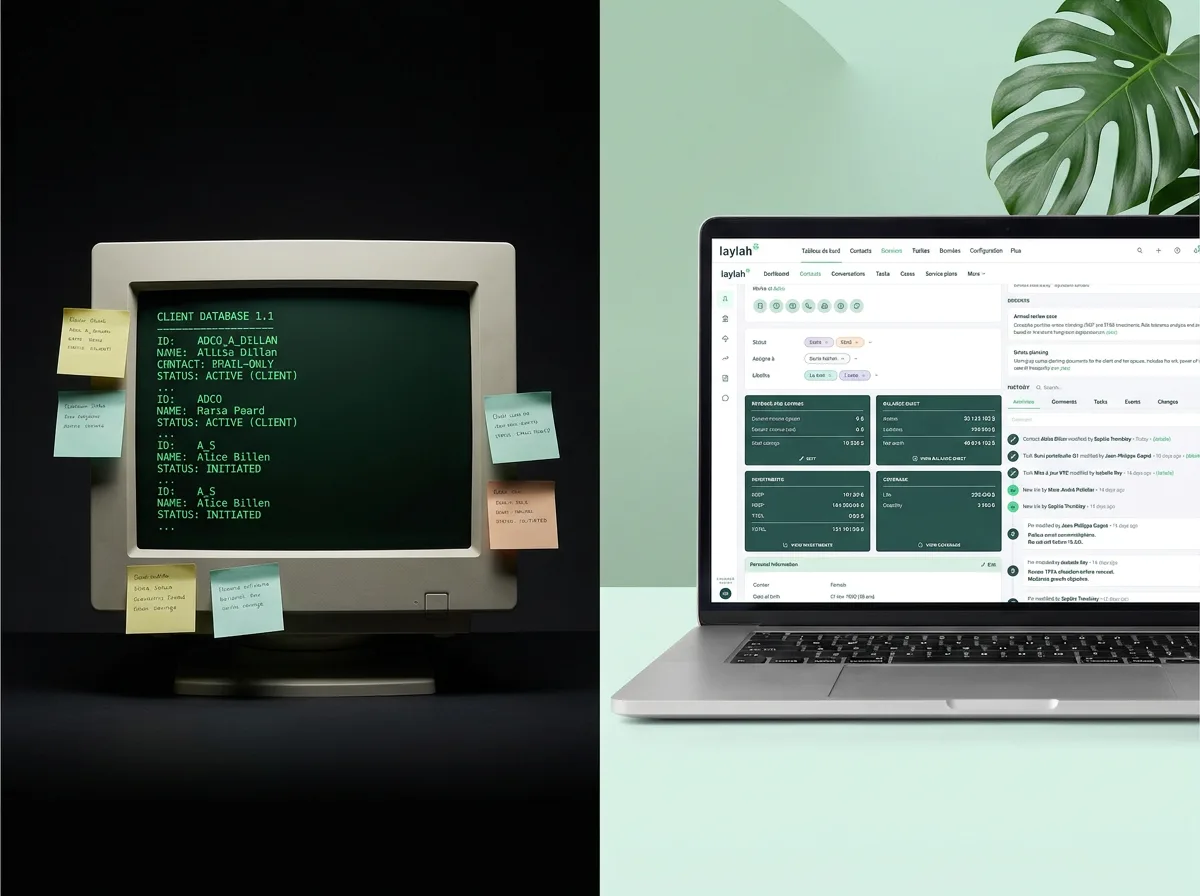
When comparing an independent financial advisor vs. bank advisor, most conversations focus on fees, products, or compensation models. The more meaningful difference sits behind the scenes: the technology that powers the advisory experience.
Independent advisors rely on flexible tools to run their business, manage relationships, and stay compliant. Bank advisors, by contrast, operate within institution-selected systems designed for consistency, scale, and control.
Choosing software built for the wrong environment creates friction, duplicate work, and a weaker client experience over time.
Independent Financial Advisor Vs. Bank Advisor: The Operational Difference
Independent advisors typically work in flexible, multi-system environments. They may use different custodians, planning tools, communication channels, and workflows depending on their niche and client base. Their technology needs to connect these moving parts while keeping everything organized and compliant.
Bank advisors operate in structured environments where systems are selected centrally. These platforms are built to support thousands of users, enforce processes, and integrate across departments like lending, insurance, and investment services.
In practical terms:
- Independent advisors build and shape their own tech stack.
- Bank advisors work within a predefined institutional stack.
- Flexibility versus control drives most technology decisions.
This difference influences everything from CRM usage to onboarding workflows to how planning tools are used with clients.
Choose tools built for your model, not tools built for someone else's system.
Explore Laylah's Features
Purpose-built tools for independent financial advisors.
What Independent Financial Advisors Need From Their Tools
For independent advisors, software is not just a support function. It is the backbone of the practice. The right tools reduce administrative work, improve client experience, and make compliance easier to manage.
Independent firms generally need systems that centralize client data, manage workflows, document advice, and support planning.
CRM and Practice Management Tools
The CRM is usually the center of an independent advisor's tech stack. But it cannot behave like a generic sales CRM. It needs to support regulated advice, client relationships, and ongoing service workflows.
Strong advisor-focused CRM systems typically include:
- Centralized client records that consolidate policies, investments, documents, and interaction history in one place
- Activity tracking and notes tied to every client file
- Case management through structured Kanban pipelines for tasks, follow-ups, and team coordination
- Built-in document management and integrated Financial Needs Analysis, so recurring advisory work happens inside the CRM instead of scattered tools
- Open integrations with email, calendar, and specialized advanced planning tools when advisors need them
Platforms designed specifically for advisors, like Laylah, go further by combining CRM with case management, client portals, and compliance tracking. This reduces the need to juggle multiple disconnected tools.
The biggest advantage is operational clarity. Advisors can see exactly what needs to happen, what has happened, and what still requires attention.
A strong CRM lets you run your practice from one place, while connecting cleanly to the specialized tools you actually use.
Financial Planning Tools
Planning tools play a central role for independent advisors because they are often the main driver of client value.
Modern planning platforms allow advisors to model different scenarios, explain trade-offs, and create a more interactive experience for clients. Instead of simply presenting recommendations, advisors can walk clients through decisions in real time.
Key capabilities include:
- Scenario and goals-based planning
- Client-friendly reports and visuals
- Data aggregation and account visibility
- Collaborative planning workflows
Independent advisors often use these tools as client engagement platforms, not just calculation engines. The software becomes part of the advisory relationship itself.
Better planning tools lead directly to stronger client relationships and retention.
Compliance and Documentation Tools
Compliance is one of the biggest operational challenges for independent advisors. Without large internal teams, the burden of documentation often falls directly on the advisor.
The most effective tools reduce this burden by embedding compliance into everyday workflows instead of adding it as a separate task.
Important features include:
- Audit trails tied to client activity
- Secure communication records
- Centralized document storage
- Workflow-based compliance checkpoints
Laylah integrates these capabilities alongside financial needs analysis, helping ensure recommendations are supported by documented analysis and client context. This approach reduces the need to reconstruct decisions after the fact.
Compliance should happen naturally during the work, not after it.
Tools Built for Independent Financial Advisors
Centralize your practice with a platform designed for how you actually work.
What Bank Advisors Need From Their Tools
Bank advisors also rely on CRM, planning, and compliance systems, but their tools are designed for a very different environment. Instead of flexibility, the priority is consistency, control, and integration across a large organization.
Enterprise Platforms and Advisor Systems
Bank advisors typically use enterprise wealth platforms that combine CRM, onboarding, reporting, and compliance into a unified system.
These platforms are designed to support large advisor populations while maintaining oversight and consistency.
Common priorities include:
- Centralized supervision and permissions
- Standardized onboarding processes
- Institution-wide reporting
- Product governance and controls
These systems make it easier for institutions to manage risk and ensure compliance across teams.
Planning and Product Tools in Banks
Planning tools still exist in bank environments, but they are usually embedded within structured workflows and approved product frameworks. This creates consistency across advisors, but it also reduces flexibility in how advice is delivered. Advisors may have less ability to customize planning approaches or experiment with different tools.
Compliance and Oversight
Compliance in bank environments is typically distributed across multiple systems, including advisor platforms, home-office tools, and recordkeeping systems. This layered approach provides strong oversight and auditability. However, it can also make workflows more rigid and less adaptable to individual advisor preferences.
Independent Financial Advisor Vs. Bank Advisor: The Biggest Tool Differences
The most important difference between independent and bank advisor tools comes down to flexibility versus control.
Independent Advisors: Flexible, Modular Tools
Independent advisors benefit from systems that are customizable, integration-friendly, and workflow-driven. These tools help smaller teams operate efficiently without requiring large operational infrastructure.
They also allow advisors to differentiate their service model and tailor their approach to specific client needs.
Bank Advisors: Controlled, Integrated Platforms
Bank advisors benefit from systems that are standardized, tightly integrated, and designed for large-scale reporting and oversight. These platforms support consistency and risk management across the institution, even if they limit individual customization.
The Client Experience vs. Backend Reality
From a client perspective, both models may look similar. Clients see reports, portals, and communication tools in both environments.
Behind the scenes, however, the systems are very different.
Independent advisors use technology to streamline operations and create a differentiated experience. Bank advisors use technology to maintain consistency and meet institutional requirements.
Which Tools Matter Most for Independent Financial Advisors and Bank Financial Advisors?
CRM and Relationship Management
- Independent advisors need CRM systems that act as operational hubs, connecting planning, communication, and workflows in one place.
- Bank advisors use CRM functionality within larger systems focused on reporting, permissions, and compliance.
Financial Planning Software
- Independent advisors rely on flexible planning tools to personalize advice and improve engagement.
- Bank advisors use planning tools within structured processes tied to approved workflows and products.
Client Communication and Portals
- Independent advisors benefit from secure, modern client portals that improve responsiveness and reduce reliance on email.
- Bank advisors typically use institution-controlled portals designed for consistency across business lines.
Workflow and Case Management
- For independent advisors, workflow tools are especially important. Without large support teams, clear task ownership and repeatable processes are essential for maintaining service quality.
- Bank workflows are usually embedded within enterprise systems rather than selected by the advisor.
Compliance and Audit Tools
- Independent advisors rely more heavily on tools that embed compliance directly into daily work.
- Bank advisors rely on layered systems that distribute compliance across multiple levels of the organization.
How Independent Advisors Can Avoid the Wrong Tools
A common mistake is adopting software designed for enterprise or bank environments. These systems may appear powerful, but they often introduce unnecessary complexity for smaller teams. This typically leads to rigid workflows, higher maintenance requirements, and continued reliance on spreadsheets or manual processes.
Independent advisors should evaluate tools based on whether they simplify operations, centralize data, and support real workflows. Platforms like Laylah that combine CRM, workflows, compliance, and communication into a single system often outperform fragmented stacks.
Why Laylah is the Premier Tool for Independent Financial Advisors
While generic CRMs and bank systems focus on scale, Laylah is built specifically for the unique operational reality of the independent advisor. By centralizing fragmented data and embedding compliance into your daily tasks, Laylah transforms your practice from a collection of manual workarounds into a efficient, high-growth engine.
Independent Financial Advisors Use Laylah Because It's:
Purpose-Built for the Canadian Market
Laylah is designed specifically for Canadian independent advisors, offering native data residency and live synchronization with major Canadian carriers. This eliminates the hours wasted on manual data entry from back-office feeds, ensuring your client information is always accurate and localized.
Compliance as a Workflow, Not a Chore
Instead of treating compliance as a separate administrative burden, Laylah embeds it directly into your daily processes through automated, timestamped audit trails. Every message, document, and decision is linked to the client record in real-time, making you perpetually audit-ready.
Integrated Financial Planning and FNA
Laylah goes beyond basic contact management by integrating Financial Needs Analysis (FNA) directly into the CRM. This allows you to pre-fill client data into insurance and retirement analyses automatically, creating a smooth transition from data collection to professional advice.
Elevate Your Practice With Laylah
The all-in-one Canadian CRM built specifically to drive independent growth.