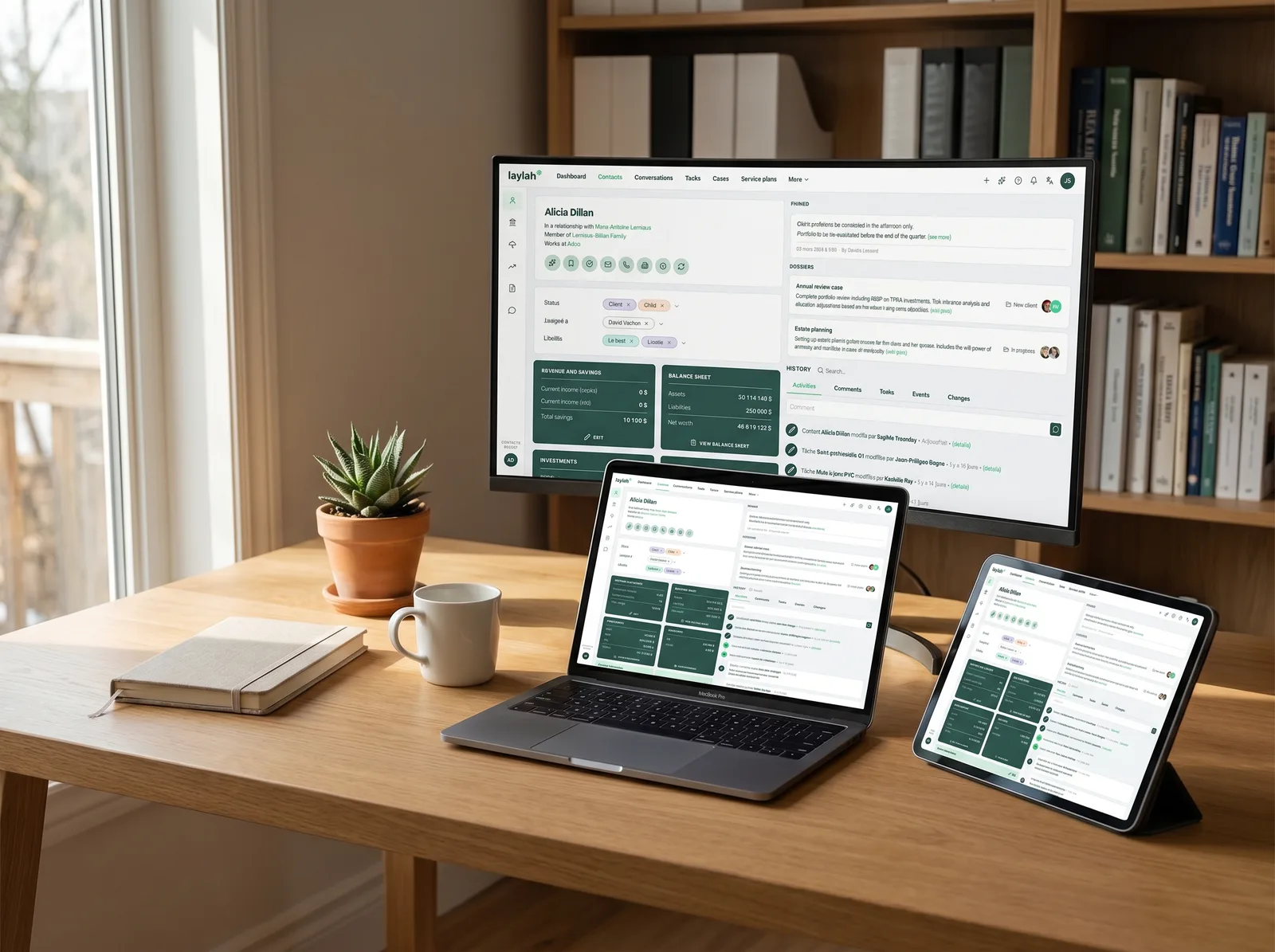
For most independent advisors, the challenge isn't finding tools -- it's managing the "tech debt" that comes with them. While specialized software exists for every niche of financial planning, the overhead of jumping between disconnected systems creates a massive "fragmentation tax". Every minute spent manually syncing data or searching for a compliance note is a minute taken away from high-value client strategy.
In a landscape where Canadian data residency and SOC 2 standards are becoming non-negotiable, the focus has shifted from having the most features to having the most fluidity. A truly effective digital ecosystem doesn't just store information; it bridges the gap between raw data and actionable advice, turning administrative friction into operational flow.
Why Financial Planner Tools Matter More Than Ever
The job of a financial planner has changed. Clients still expect strong advice on insurance, retirement, cash flow, and long-term goals, but they also expect faster responses, cleaner communication, and a more connected experience. That means financial planner tools are no longer just nice add-ons. They shape how efficiently an advisor can gather client data, build recommendations, follow up on action items, and keep the entire relationship moving forward.
For many firms, the real issue is not a lack of technology. It is too much disconnected technology. One tool stores notes, another handles forms, another tracks tasks, and another supports planning calculations. When those systems do not talk to each other, advisors end up doing duplicate entry, chasing documents, and losing time that should be spent serving clients.
Explore the Ultimate Tool for Financial Planners
The Shift from One-Time Plans to Ongoing Advice
Modern clients want more than a static plan in a binder. They want an advisor who can revisit priorities, update assumptions, and respond quickly when life changes. That makes financial planning software far more valuable when it supports ongoing work, not just one-time outputs.
A useful platform should help advisors:
- Organize client records in one place
- Track cases, tasks, and deadlines
- Support goal setting and financial needs analysis
- Document communications for compliance
- Make updates without rebuilding the process from scratch
Where Disconnected Software Starts to Hurt
Disconnected tools usually show up as small inefficiencies first. A planner enters the same household details twice. A support team member cannot find the latest questionnaire. A compliance note lives in an inbox instead of the client file. Over time, those gaps affect service quality and audit readiness.
That is why many firms now review their stack through a workflow lens instead of a feature lens. The question is no longer, "Does this tool do one thing well?" It is, "Does this tool help the whole advisory process run better?"
The Core Financial Planner Tools Every Advisory Firm Should Adopt
There is no single stack that fits every firm, but there are a few categories that matter for almost everyone. The strongest setups usually combine planning capability with clean operations, secure communication, and reliable visibility across the client journey.
CRM and Client Data Management
A good financial advisor CRM should do more than store names and phone numbers. It should centralize household information, meeting history, open tasks, documents, and follow-up items so the entire team can work from the same source of truth.
When firms evaluate CRM-related tools, these capabilities usually matter most:
- A clear client record that combines notes, files, and communication history
- Task and workflow visibility for the advisor and support team
- Easy handoffs between planning, service, and follow-up work
- Reporting that helps firms see workload, activity, and bottlenecks
For independent advisors, this category often becomes the foundation for every other tool decision.
Financial Planning and Needs Analysis
Planning tools still need to do the obvious work well. Advisors need ways to model goals, assess risk, analyze cash flow, and guide conversations about retirement, protection, and future obligations.
The most useful planning tools often include goal setting, scenario planning, and client-friendly outputs that make recommendations easier to understand. For insurance-focused and hybrid firms, they should also support protection conversations around life insurance, disability, and critical illness, rather than forcing those workflows into spreadsheets.
Compliance, Document Management, and Secure Collaboration
Planning is only part of the job. Advisors also need secure processes around recordkeeping, document exchange, and traceability. That is why compliance and collaboration tools should not be treated as side systems. They affect daily execution just as much as planning engines do.
Look for platforms that support compliance workflows, a secure client portal, and structured document handling. When those pieces are connected, it becomes easier to show what happened, when it happened, and what information supported a recommendation.
When your planning, compliance, and client-management tools work together, you spend less time stitching systems together and more time advising.
See How Connected Tools Improve Advisor Workflows
How to Choose Financial Planner Tools Without Creating a Bigger Mess
Advisors often buy software to solve one problem, then discover they created three new ones. The right evaluation process keeps the focus on operating reality: what your team does every day, where work stalls, and which gaps create the most friction.
Start with Workflow, Not Feature Lists
A long feature list can be impressive, but it does not always reflect daily usefulness. Before comparing vendors, map the actual client journey from discovery to onboarding to review meetings and service requests. Then identify where work gets delayed, duplicated, or dropped.
A practical review usually looks like this:
- Define the core services your firm delivers
- Identify which steps are manual, repetitive, or high-risk
- Match tools to those operational gaps
- Compare ease of use, not just breadth of features
This approach helps smaller firms avoid overbuying and helps growing teams avoid point solutions that create more fragmentation later.
Prioritize Integrations, Visibility, and Adoption
Even strong tools fail when advisors do not use them consistently. That is why integrations and usability matter almost as much as planning depth. If a system connects with calendars, email, and back-office processes, the odds of adoption go up.
Before you commit, ask a few direct questions:
- Can the team see open work in one place?
- Can client-facing and back-office tasks be tracked without spreadsheets?
- Can the system support consistent workflows across the firm?
If the answer is no, the tool may still create invisible admin work.
Laylah: A Unified Ecosystem of Financial Planning Tools for the Canadian Advisor
While generic CRMs try to be everything to everyone, Laylah was built with a specific focus: the daily operational reality of independent Canadian financial advisors and their teams. By integrating practice management, financial analysis, and client collaboration into a single environment, Laylah eliminates the need to stitch together fragmented tools.
All-in-One Practice Management and CRM
Laylah serves as the central nervous system for your firm, replacing generic databases with an advisor-centric design.
- Centralized Client Data: Pull all household information, meeting history, and documents into a single source of truth.
- Intelligent Case Management: Track every application and service request through customized pipelines, ensuring nothing falls through the cracks.
- Workflow Automation: Use standardized templates for repeatable processes to ensure consistent service delivery across your entire team.
Integrated Financial Needs Analysis (FNA)
One of Laylah's most distinct advantages is the ability to run a Financial Needs Analysis directly within the CRM, keeping your data and recommendations in one place.
- Holistic Analysis: Perform life insurance, disability, and critical illness assessments using the client profile data you already have.
- Simplified Retirement Planning: Help clients visualize their future without the complexity of over-engineered external planning modules.
Frictionless Compliance and Security
In the Canadian regulatory environment, compliance is a core requirement of the job, not an optional feature. Laylah embeds these safeguards into your daily habits.
- Automatic Audit Trails: Every interaction and document exchange is timestamped and preserved, creating a permanent, traceable record for audit readiness.
- Canadian Data Residency: Host your data on Canadian soil with AWS infrastructure, ensuring compliance with local privacy standards.
- Secure Client Space: Replace risky email attachments with a branded, secure portal for document exchange and integrated messaging.
Real-Time Data Synchronization
The manual entry of carrier data is one of the biggest bottlenecks for independent firms. Laylah solves this through live carrier and back-office feeds.
- Automated Updates: Synchronize advisor data from Canadian sources automatically to reduce manual entry.
- Ecosystem Integration: Connect directly with Google and Microsoft 365 to keep your calendar, email, and client records in sync.
Operational Excellence Through One Unified Interface
By merging back-office data synchronization with specialized planning and compliance tools, Laylah eliminates the "fragmentation tax" that slows down Canadian firms. Instead of managing multiple logins and manual entries, you get a single, secure environment that tracks every case from discovery to final audit.
Ready to See How a Connected Platform Can Transform Your Practice?
Join the growing number of Canadian financial advisors who are centralizing their data, automating compliance, and spending more time with clients.