A renewal date passes and no one reached out. An opportunity goes cold because the follow-up never happened. A file sits waiting for documents that no one chased. A new team member makes the same mistake a senior advisor made three years ago, because no one wrote down how things should work.
You know that sinking feeling that comes with dropping the ball.
This happens in every advisory practice. Not because people don't care, but because the work that supports clients often has no structure to make sure it actually gets done. Consistently. Systematically. Automatically.
What we often see: Client commitments live in conversations. Follow-ups live in inboxes. Documents live in folders. Tasks live in someone's head. Eventually, inevitably, something gets missed.
Delivering on promises consistently requires a system that embeds the right activities into how work actually gets done.
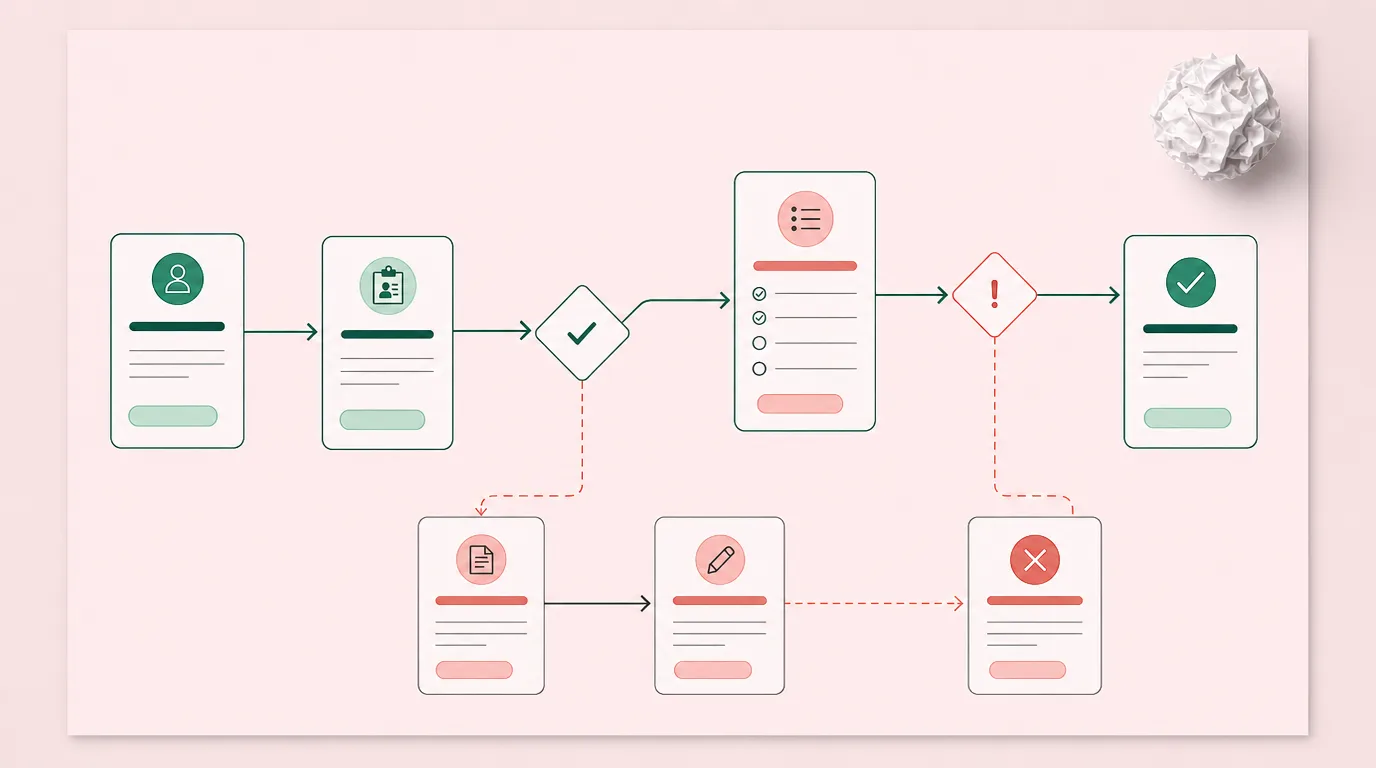
Cases in Laylah bring together the client record, communication, tasks, documents, and defined workflows in one place, in the right sequence. Everyone follows the same steps, in the same order. Errors, missed steps, and variability go down.
Case management embeds the day-to-day activities that support your clients' best interest, operational excellence, and compliance obligations.
The real problem: work without structure.
Financial advisors operate under a weight of obligations that most people outside the industry don't see. Licensing requirements across multiple jurisdictions. Product suitability. Know-your-client updates. Privacy compliance. Carrier documentation. Regulatory reporting. Continuing education.
And that's just the baseline. On top of it, you're running a business, serving clients, and trying to grow.
When this volume of responsibility has no structure to support it, risk accumulates daily. Not because anyone is careless, but because there's too much to hold in memory and too many places for things to slip.
Advisors make promises every day to follow up, review coverage, circle back after a life event, or send "that document".
The intention is always there. What's missing is a system that turns intention into execution.
The symptoms
Promises get made. Delivery gets improvised. A client mentions they want to review their group benefits. You make a mental note. Maybe jot something down. But no defined process is started, no task is triggered for a team member, and three months later they mention they went with another advisor. You forgot. They didn't.
Teams work from different versions of reality. One person thinks a file is complete. Another thinks it's waiting on documents. A third has no idea it exists. Without a shared view of progress, coordination becomes guesswork and follow-up becomes "did anyone hear back on that?"
Compliance gets reconstructed, not evidenced. When regulators ask for proof of engagement, teams scramble to piece together what happened from scattered notes, emails, and memory. The work was done. The trail wasn't captured as it happened.
Reactive becomes the default. Instead of working through a logical sequence, work happens in response to whoever calls, emails, or escalates loudest. Urgency replaces priority. Small things become big problems because no one saw them coming.
What "cases" actually mean in Laylah.
A case is not a folder. It's not a task list. It's not another thing to manage.
A case is the operational structure for delivering on a client commitment.
Think of it this way: when it's time for a client review or a client asks you to help with something, whether that's a KYC update, new insurance application, an investment review, or a coverage change, there's a sequence of things that need to happen. Information to gather. Documents to collect. People to involve. Steps to complete. Deadlines to meet.
A case holds all of that together in one place.
- The client record
- Communication and notes
- Tasks and delegation
- Documents and history
- A defined process that guides what happens next
“A case is a process, and workflows are what support that process. When you build a case in Laylah, you're defining the logical sequence of events that should happen every time this type of work occurs. This creates consistency across your team, evidence of engagement as work happens, and alignment with your suitability, documentation, and client-best-interest obligations. The process isn't just followed. It's proven.
Everyone on the team sees the same case. Everyone knows where it stands. Everyone follows the same sequence.
The work stops living in inboxes, notepads, and memory. It lives in a structure designed to make sure nothing gets missed.
Embedding the work that matters most.
Advisors carry a long list of responsibilities. Here are four that case management directly supports:
- Acting in the client's best interest
- Running an operationally sound practice
- Meeting compliance and regulatory obligations
- Managing how client information and data flows through the practice
They overlap. A gap in one creates exposure in another.
A missed follow-up means a client didn't get the advice they needed.
Undocumented files become compliance exposures the moment someone asks for proof.
Client data scattered across inboxes, spreadsheets, and personal devices is a privacy risk.
Case management embeds the day-to-day activities that support all four.
Client best interest gets built into the workflow. When the right steps are defined in advance, clients get consistent service regardless of who handles their file or how busy the week gets. Reviews happen on schedule. Follow-ups don't depend on someone remembering.
Operational excellence becomes repeatable. Most practices operate reactively. Work happens in response to whatever lands in the inbox or whoever calls. Case management shifts the practice to proactive. New team members follow the same process as senior advisors. Work flows predictably instead of chaotically. You build capacity without adding confusion.
Compliance obligations are met through normal work. Every task completed, every note added, every document uploaded becomes part of the client record. Evidence is created as the work happens, not reconstructed later when someone asks for it.
Client data stays organized and protected. Information flows through defined processes instead of scattering across tools and inboxes. You know where client data lives, who has access, and how it moves through your practice. This supports your team and your clients in delivering excellent service because everyone has access to valuable, up-to-date information.
This is what "embedded" means. The activities that protect your clients, your practice, and your license aren't extra steps bolted on at the end. They're woven into how work gets done every day.
What changes when Cases are in place.
Client requests get handled faster. The team knows exactly where each case stands, what's been done, and what happens next. No searching through emails. No asking around. No wondering if someone already took care of it.
Opportunities stay visible. Pipeline views show what's in progress across the practice. A client who mentioned interest in a review three months ago doesn't disappear into someone's memory. It's tracked, visible, and actioned.
Teams work from the same information. Everyone sees the same case, the same tasks, the same history. Handoffs happen cleanly. Coverage during vacations or sick days doesn't mean starting from scratch.
New team members get up to speed faster. Defined processes show how work should flow. Training becomes about following the system, not absorbing years of tribal knowledge from whoever has time to explain it.
Compliance is already documented. When questions come up, the history is there. You're not reconstructing what happened. You're showing what was already captured as the work was done.
The natural byproducts of streamlined processes and workflows are simplicity, clarity, proactivity, productivity, and growth.
The honest conversation about case management.
Before implementing case management, here's what every practice should understand:
The system supports execution. It doesn't replace judgment. Cases define the sequence and structure. The advisor still makes decisions, adapts to client needs, and exercises professional judgment. The system makes sure the basics don't get missed while you focus on what matters.
Adoption requires commitment. A well-designed case structure only works if the team uses it. Someone needs to champion adoption, train the team, and hold the standard. The system makes good habits easier, but it doesn't make them automatic.
You need to define your processes first. Laylah can't systematize what doesn't exist. Before building cases, you need clarity on how work should flow in your practice. This is an investment upfront that pays off for years.
Flexibility is built in, but discipline is required. Cases allow for variation when situations call for it. But the value comes from consistency. If everyone improvises, you're back where you started.
From reactive to reliable
Most advisory practices are starving for structure, consistency and a system that supports the work they actually do for clients.
Case management gives your practice a way to deliver on client commitments consistently, meet your obligations without scrambling, and build something that runs on design instead of memory.
The work still requires judgment, care, and expertise. That's what advisors do. The system just makes sure nothing falls through the cracks while they do it.
See case management in action.
If you want to see how Laylah helps firms systematize client work and embed consistency into daily operations:
See Case Management in Action
See how Laylah helps firms systematize client work and embed consistency into daily operations.